
A child who does not enjoy team sports may still find martial arts worth trying because they can work on their own skills within a group. It is not a solitary activity, though: expect shared instruction and potentially partner practice, then use a trial to see whether the actual class suits your child.
A child who does not enjoy football, netball or another team sport may still find martial arts worth trying. Martial arts can offer an individual skill path inside a group, but it is not a solo lesson: children still listen together, share space and may practise with partners.
Andrew Rheeston’s Martial Arts Academy has a dedicated Martial Arts for Ages 8–11 programme at North Solihull Sports Centre in Chelmsley Wood. The useful question is not whether martial arts is automatically “better” than team sport. It is whether the real class format gives your child a kind of challenge they want to try again.
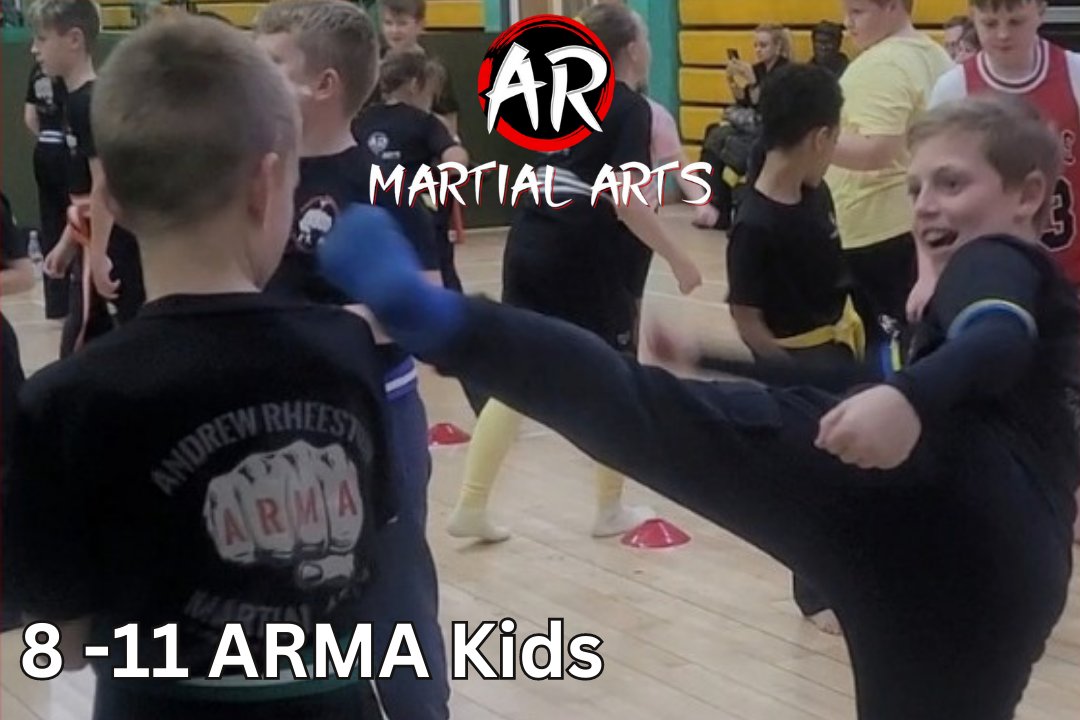
Why might martial arts feel different from a team sport?
In many team sports, play revolves around a shared score, possession and decisions made while the whole team moves at once. Martial arts practice can feel different because a child may spend time learning one movement, repeating a short sequence or working towards a personal technical task.
That does not make every martial arts class non-competitive, quiet or individual. A session may include group warm-ups, games, pad work, paired drills or other shared activities. Clubs also differ in how they use grading, sparring and competition.
AR Martial Arts publicly describes its ages 8–11 pathway through progressive martial arts and self-defence skills in a mixed-ability setting. It does not publish a lesson-by-lesson syllabus, competition policy or current timetable. Ask what the current beginner experience involves rather than using a general idea of martial arts to fill those gaps.
What if my child says they are “not sporty”?
Treat that phrase as the start of a conversation. A child may dislike one sport because of the rules, the pace, the team role, a previous experience or simply because the activity does not interest them. It does not prove that they will enjoy martial arts—and it does not mean they are incapable of learning it.
Sport England’s guidance on positive experiences for children says that what feels enjoyable and positive varies between children. It puts enjoyment, the child’s needs and family involvement in decisions ahead of a one-size-fits-all activity.
That is general guidance, not evidence that AR Martial Arts will suit every child. A practical response is to ask what your child disliked before and what they would be willing to try now:
- Did they dislike being responsible for a team result?
- Did they struggle to understand a fast-moving game?
- Would they prefer practising one skill several times?
- Are they comfortable learning alongside other children?
- How do they feel about working with a partner?
The answers help you ask the academy more specific questions without labelling the child or promising that a different activity will change their personality.
Does martial arts still involve teamwork and partners?
It can. A child may be progressing on an individual technique while still relying on a partner to hold a pad, follow a drill or respect an agreed stopping point. Those are cooperative tasks even when there is no team score.
AR Martial Arts’ public information does not state exactly which partner activities a complete beginner does in each session. Before attending, ask:
- What does a new child practise alone, with an instructor and with a partner?
- How are partners matched for a particular drill?
- How are the start, stop and contact rules explained?
- Can a child watch a demonstration again before joining in?
- What happens if the class format does not feel right for them?
This article does not repeat the academy’s separate guide to children’s self-defence, contact and safeguarding questions. Those topics need their own detailed answers. Here, the narrower decision is whether a child who dislikes team-sport dynamics might prefer practising an individual martial arts skill in a group setting.
What should we notice during the free week?
AR Martial Arts currently offers one week of martial arts classes free. Use it as a genuine test rather than looking for a dramatic change after one session.
Before the first class, tell the academy that your child is new and briefly explain what they have not enjoyed in other activities. Ask which current ages 8–11 session is appropriate and what the child will be expected to do.
After each session, use neutral questions:
- Which part did you understand most clearly?
- Was there anything you wanted more help with?
- How did the partner or group activities feel?
- Is there one part you would like to try again?
Look for a workable fit: your child can follow the main instructions, knows how to ask for help, experiences an appropriate level of challenge and shows some willingness to return. Do not use one difficult moment as proof that they cannot do martial arts, but do take repeated discomfort or a clear lack of interest seriously.
No class can guarantee confidence, focus, school performance, behaviour, fitness or self-defence ability. The trial is useful because it replaces those promises with direct experience of the current programme.
Where is the ages 8–11 class in Chelmsley Wood?
AR Martial Arts trains at North Solihull Sports Centre, Conway Road, Chelmsley Wood, Solihull, B37 5LA. Solihull Council’s official listing confirms the venue and address.
The venue’s official page lists centre-wide facilities including accessible parking bays, ramp access, automatic entrance doors, a hearing loop, lift access, accessible toilets and accessible changing facilities. These facts do not describe the academy’s room, coaching or individual adjustments, so contact the venue and academy about a specific access need.
The centre’s opening hours are not AR Martial Arts class times. The academy does not currently publish a timetable, membership price, detailed partner-work sequence or competition policy. Call before travelling, read the academy’s general martial arts FAQs and use the free week to decide from the class your child actually experiences.
Frequently asked questions
Can a child who dislikes team sports enjoy martial arts?
Possibly. Martial arts can give a child an individual skill to practise inside a group, but enjoyment depends on the child and the actual class. AR Martial Arts offers a separate ages 8–11 programme and a free week, so use the trial to test the fit rather than assuming a particular outcome.
Is the ages 8–11 programme a non-competitive class?
AR Martial Arts does not publish a current competition policy or detailed class format, so the website cannot promise that every activity is non-competitive. Ask whether the current session uses games, partner drills, sparring, grading or competition, and how those elements are introduced to a beginner.
Will my child have to work with a partner?
The academy's programme information refers to progressive martial arts and self-defence training, but it does not publish a lesson-by-lesson plan. Ask what partner work the current ages 8–11 class uses, how partners are matched and what happens if a child needs more time before joining a drill.
Where is AR Martial Arts in Chelmsley Wood?
Classes are held at North Solihull Sports Centre, Conway Road, Chelmsley Wood, Solihull, B37 5LA. The sports centre's opening hours are not the academy timetable, so contact AR Martial Arts before travelling to confirm the appropriate ages 8–11 session.
Can my child try martial arts before we commit?
Yes. AR Martial Arts currently offers one week of martial arts classes free. Use the week to notice whether your child understands the instructions, feels able to participate, responds to partner activities and wants to return; it is not a guarantee of confidence, fitness or behaviour change.