
Martial arts can contribute to a 5–7-year-old's physical activity when the session gets them moving, but one class is not the whole weekly plan. UK guidance recommends an average of at least 60 minutes of moderate-to-vigorous activity a day across the week, with varied activity. AR does not publish its class duration or intensity.
Yes. Martial arts can contribute to a 5–7-year-old’s physical activity when the session gets them moving. It should not, however, be treated as the child’s whole weekly activity plan or converted into an exact number of minutes without knowing what happens in the current class.
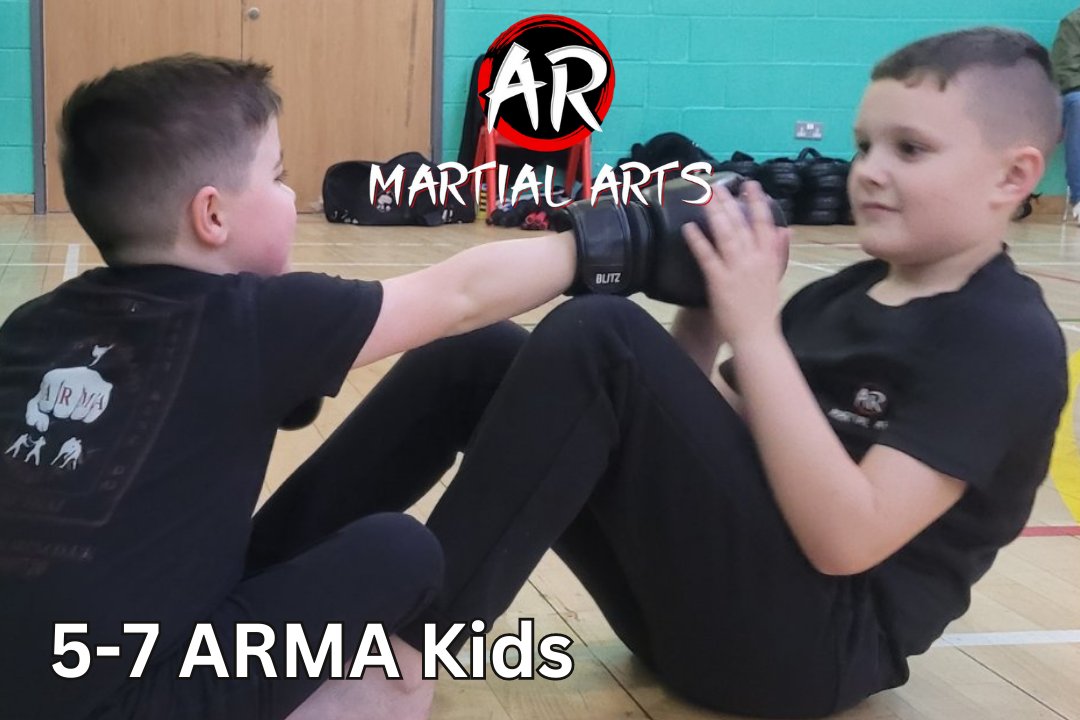
Andrew Rheeston’s Martial Arts Academy offers a dedicated Martial Arts for Ages 5–7 programme at North Solihull Sports Centre in Chelmsley Wood. Its public pages do not state the class length, lesson-by-lesson content or intensity, so this guide explains the general UK guidance and the local questions a parent still needs to ask.
What does the UK activity guidance say for ages 5–7?
The UK Chief Medical Officers’ guidance says children and young people aged 5–18 should aim for an average of at least 60 minutes of moderate-to-vigorous physical activity a day across the week. It also recommends different types and intensities of activity across the week, plus breaking up long periods of sitting with movement.
The word average matters. The guidance is not a pass-or-fail stopwatch for every individual day. Its current GOV.UK explanation includes PE, active travel, after-school activity, play and sport as possible parts of the weekly total.
The NHS guide for ages 5–18 also lists martial arts among activities that can help strengthen muscles and bones. That is general health guidance, not evidence that every minute of every martial arts class reaches the same intensity.
How can a martial arts class contribute?
A class can include movement that raises the heart rate, skill practice, short explanations, turns, rest and changes of activity. The contribution therefore depends on the real session rather than the label “martial arts”.
The NHS describes moderate activity as movement that makes someone breathe faster, feel warmer and raise their heart rate. Its simple talk test is that a person can still talk but not sing. For a 5–7-year-old, effort may change quickly as one drill ends and another begins, so use that as a broad clue rather than measuring or judging every minute.
AR Martial Arts’ current ages 5–7 page promotes a younger-child martial arts programme and a free week, but it does not publish:
- the duration of the current session;
- how much time is active movement, instruction or waiting for a turn;
- the intensity of each activity;
- a weekly attendance recommendation; or
- a fitness or health outcome.
Those missing details should stay missing from any calculation until the academy confirms them.
Does one weekly class cover the whole recommendation?
It should not be assumed to. The guidance calls for activity across the week and a variety of movement. A martial arts session may form one useful part of a wider pattern that also includes playground activity, walking or cycling, PE, swimming, dancing, football or energetic play.
Variety does not mean filling every evening with organised clubs. The official guidance recognises play and active travel as activity too. The practical goal is to notice the whole week, not to expect one paid session to do every job.
If a child has a health condition or you are unsure which activity is suitable, the NHS advises getting medical guidance and choosing exercise appropriate to the child’s age, ability and experience. This article cannot assess an individual child’s health or prescribe an exercise plan.
What should I ask during the free week?
AR Martial Arts currently offers one week of martial arts classes free. Use it to understand the actual session rather than assuming a class title proves a particular activity total.
Ask:
- How long is the current ages 5–7 session?
- What kinds of movement normally appear in it?
- How are active tasks balanced with demonstrations, turns and breaks?
- How is an activity adapted when a child is new, tired or unsure?
- Which session is appropriate for my child’s age and experience?
During the week, notice whether your child spends parts of the class breathing faster and feeling warmer, whether the pace includes appropriate recovery, and whether they want to take part again. Enjoyment matters because children are more likely to keep choosing movement that feels positive. Sport England’s guidance for parents and carers recommends asking children why they take part and how they want to be supported.
This activity-planning question is separate from deciding whether a young child is ready for a martial arts class. For readiness, coaching and safety questions, read the guide to martial arts for 5–7-year-olds in Chelmsley Wood. The academy’s general FAQs cover other first-visit details.
Where is the ages 5–7 programme in Chelmsley Wood?
AR Martial Arts trains at North Solihull Sports Centre, Conway Road, Chelmsley Wood, Solihull, B37 5LA. Solihull Council’s official listing and the venue operator’s page both confirm the sports centre and address.
The centre’s opening hours and facilities are not an AR Martial Arts timetable or lesson plan. Contact the academy before travelling to confirm the correct ages 5–7 session, then use the free week to judge how the real class fits alongside the rest of your child’s active week.
Frequently asked questions
Does martial arts count towards the 60 minutes of activity a day?
It can contribute. The NHS lists martial arts among activities that can strengthen muscles and bones, while the UK guidance recommends an average of at least 60 minutes of moderate-to-vigorous activity a day across the week. How much a particular class contributes depends on its duration, content and intensity.
Is one martial arts class a week enough activity for a 5–7-year-old?
Do not assume that one class covers the whole guideline. Children are advised to do varied activity across the week, including play, active travel, PE, sport and other movement. AR Martial Arts does not publish the length or intensity of its ages 5–7 session, so it cannot be converted into a verified weekly total from the website.
How can I tell whether an activity is moderate intensity?
The NHS says moderate activity raises the heart rate and makes someone breathe faster and feel warmer; a simple guide is that they can talk but not sing. A young child's effort can change throughout a class, so use that only as a practical guide rather than grading every minute.
Should young children do activities other than martial arts?
Yes. UK guidance recommends a variety of types and intensities across the week to develop movement skills, muscular fitness and bone strength. Martial arts can be one part of that mix alongside active play, walking, cycling, PE, swimming or other activities the child enjoys.
Where is the AR Martial Arts ages 5–7 programme?
AR Martial Arts trains at North Solihull Sports Centre, Conway Road, Chelmsley Wood, Solihull, B37 5LA. The academy does not publish a current timetable, class length or session intensity, so contact it before travelling to confirm the appropriate ages 5–7 session.