
For a child aged 5–7, useful martial arts progress can mean understanding a routine, trying a movement again, responding to a specific correction or taking part more independently. A belt may mark part of a club's pathway, but parents should also look for small, individual gains and ask how progress is assessed.
Progress in martial arts for a child aged 5–7 is usually easier to see in small actions than in a dramatic before-and-after result. Understanding a routine, remembering one part of an instruction, trying a movement again or needing a little less help can all be useful signs. A belt may be part of the picture, but it should not be the only way a parent judges the experience.
Andrew Rheeston’s Martial Arts Academy has a dedicated Martial Arts for Ages 5–7 programme at North Solihull Sports Centre in Chelmsley Wood. The academy does not publish a belt system, grading criteria or a guaranteed timeline for progress. This guide therefore separates general coaching principles from the programme details you need to ask AR Martial Arts about directly.
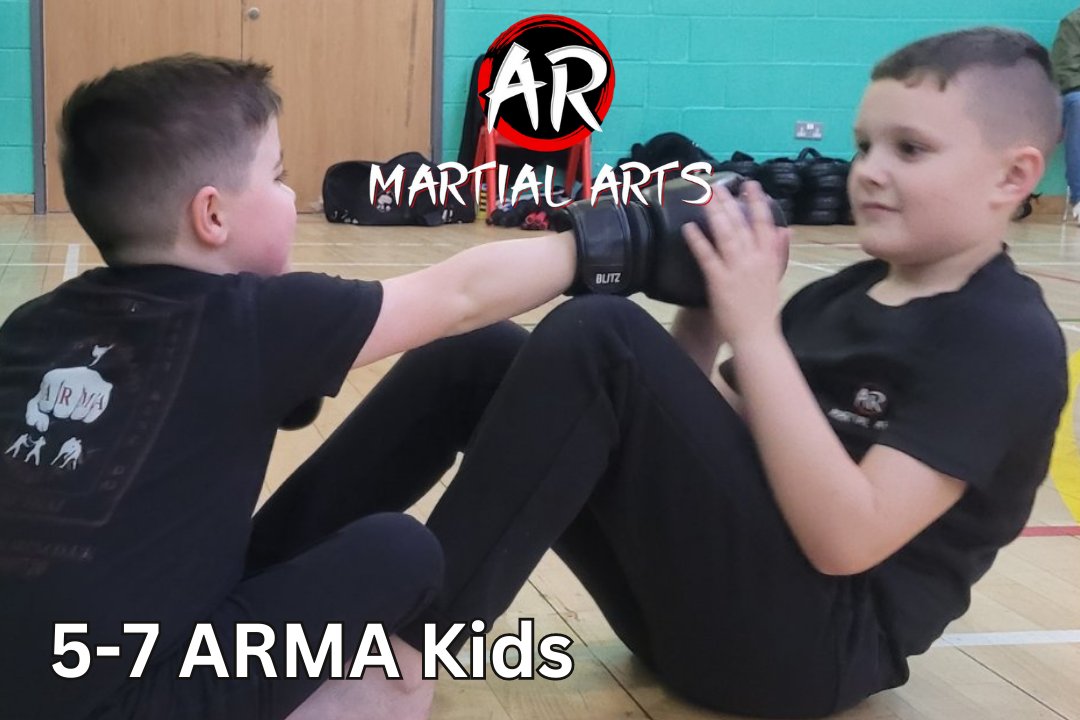
What can progress look like at ages 5–7?
Young beginners do not all start in the same place. One child may copy a movement quickly but need help taking turns. Another may listen carefully while needing more time to coordinate a new action. Comparing the two can hide the progress each child is actually making.
Useful things to notice include whether a child is beginning to:
- recognise where to stand and what happens next;
- listen for the start and stop of an activity;
- remember one movement or instruction from an earlier session;
- make a small adjustment after a clear correction;
- take turns with a pad or partner more independently;
- ask for help when something is unclear; or
- try again after finding a task difficult.
These are examples for a parent to observe, not a published AR Martial Arts assessment checklist. The exact skills, expectations and milestones belong to the academy’s current ages 5–7 programme and should be explained by the instructor.
Why is a belt not the whole answer?
Belts, stripes, certificates and gradings vary between martial arts and between organisations. They can give a child a visible milestone, but the colour alone does not tell a parent what was assessed, how consistently the skill can be shown or how one academy’s level compares with another.
AR Martial Arts does not currently publish:
- a belt order for the ages 5–7 group;
- the skills required for a grading;
- how often gradings take place;
- whether every child follows the same timetable; or
- any grading or equipment fees.
That means it would be inaccurate to promise a first belt within a set number of weeks or to describe an unpublished grading pathway. Before joining, ask what a milestone means inside this programme and what evidence the instructor uses when deciding that a child is ready for the next step.
Current Chelmsley Wood search results include schools that promote named belt stages and fixed or typical timeframes. Those details apply only to those schools. They are useful reminders to ask AR Martial Arts about its own system, not evidence that AR uses the same one.
What does useful feedback sound like?
The most helpful feedback tells a child what they did and what to try next. “Keep your hands here” or “you waited for the signal that time” gives more information than a vague label such as “naturally talented”.
UK Coaching’s current sport psychology guidance recommends praising effort and process rather than only outcomes. It also advises using specific, actionable feedback and recognising small gains. Its coach-and-participant relationship guide describes a mastery approach that values personal improvement rather than comparison or ranking within a group.
Those are general coaching principles, not proof of a particular AR Martial Arts method or credential. During a trial, listen for whether corrections are understandable, connected to the activity and suitable for your child’s current starting point.
How can a parent track progress without adding pressure?
You do not need a detailed scorecard after every class. A short, neutral question is often enough:
- What did you practise today?
- What felt easier than last time?
- What would you like to try again?
- What did the instructor help you change?
Try to record what your child says or does rather than translating every answer into confidence, discipline or behaviour claims. For example, “remembered where to stand without prompting” is a clearer observation than “became more disciplined”.
Over several sessions, you may see a pattern. The child might understand instructions sooner, recover from a mistake more comfortably or remember a movement they previously found unfamiliar. None of these observations guarantees an educational, behavioural, fitness or wellbeing outcome outside the class.
It is also reasonable for progress to be uneven. A child may participate confidently one week and need more reassurance the next. Tiredness, an unfamiliar activity or a change in the group can affect one session. Look for the overall experience and ask the instructor for context before treating a single difficult class as a verdict.
Which progress questions should I ask the academy?
Before you compare belt colours or promises, ask questions that reveal how the current programme works:
- What are the first few skills or routines a complete beginner is expected to learn?
- How do you adapt feedback for children who start at different points?
- How will you tell me what my child is working on?
- Do you use belts, stripes, certificates or another way to recognise progress?
- What does a grading assess, and are there separate fees or equipment requirements?
- How do you decide when a child should move from the ages 5–7 programme to the ages 8–11 programme?
The last question is especially useful for a seven-year-old. The public age bands confirm that AR Martial Arts has separate 5–7 and 8–11 pathways, but they do not publish an automatic transition policy. Age may be part of the answer; the academy still needs to explain the current placement decision for an individual child.
How should we use the free week?
AR Martial Arts currently offers one week of martial arts classes free. Use it to understand how progress is supported rather than to look for a guaranteed change in seven days.
Choose one or two simple things to watch. Does your child understand the routine a little sooner? Do they receive a specific correction and get another chance to try? Can the instructor explain what the child is practising and why it is appropriate for a beginner?
At the end of the week, ask the academy what the next realistic milestone would be and how it would be recognised. A useful answer should describe the current programme, not promise a belt, school result, behaviour change or self-defence outcome by a fixed date.
Where is the Chelmsley Wood programme?
AR Martial Arts trains at North Solihull Sports Centre, Conway Road, Chelmsley Wood, Solihull, B37 5LA. Solihull Council’s official listing confirms the venue and address.
The sports centre’s opening hours are not the academy timetable. AR Martial Arts does not publish current class times or membership prices, so contact the academy before travelling to confirm the correct ages 5–7 session and ask about its current progress and grading approach. For other practical questions, read the academy’s martial arts FAQs before claiming the free week.
Frequently asked questions
How quickly should a 5–7-year-old progress in martial arts?
There is no reliable timetable that applies to every child or every martial arts programme. Progress depends on the child, the skill being practised and the academy's own pathway. Look for understandable feedback and small gains over time rather than expecting a particular belt or outcome by a fixed date.
Does AR Martial Arts publish a belt or grading system for ages 5–7?
No current public AR Martial Arts source sets out a belt order, grading criteria, fees or promotion timetable for the ages 5–7 programme. Ask the academy directly how it records progress, whether gradings are used and what a parent should expect before making a longer commitment.
What can I watch for during the free week?
Choose one or two simple observations: whether your child understands a routine more easily, remembers part of an instruction, tries again after a mistake or responds to a specific correction. A free week is too short to promise a transformation, but it can show you how the coaching recognises a beginner's starting point.
Where is the ages 5–7 programme held?
AR Martial Arts trains at North Solihull Sports Centre, Conway Road, Chelmsley Wood, Solihull, B37 5LA. The academy does not publish a current timetable, so contact it before travelling to confirm the appropriate ages 5–7 session.