
Tai sabaki means managing or shifting the body to change line, distance or angle. In Wado Ryu it is commonly associated with moving away from an attack line rather than relying only on a hard collision. AR Martial Arts mentions movement and evasive techniques, but does not publish its beginner drills, so ask how the principle is taught locally.
Tai sabaki means managing or shifting the body to change line, distance or angle. In Wado Ryu, it is commonly linked with moving away from an attack line rather than relying only on a hard collision. It is a principle to learn through coached practice, not one magic step or a promise that every situation can be avoided.
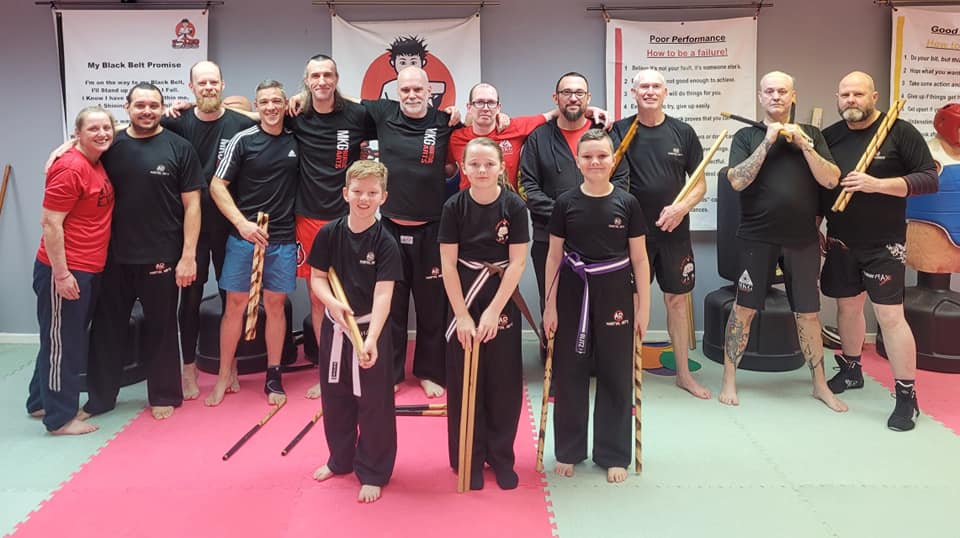
Andrew Rheeston’s Martial Arts Academy offers a dedicated Wado Ryu Karate programme in Chelmsley Wood. Its public information mentions fluid movement, strikes, blocks and evasive techniques, but it does not publish a lesson-by-lesson syllabus or name tai sabaki specifically. This guide therefore separates general Wado Ryu research from what is verified about the local class.
What does tai sabaki mean?
The Japanese term is often translated as body management, body shifting or body movement. The Canada Zenkuren Wado Karate Association’s terminology guide describes three connected elements of sabaki: a change of direction, body and technique working together.
That is more useful than translating tai sabaki as “dodging” and stopping there. The principle can involve:
- leaving or changing the line of an attack;
- adjusting distance so the original attack no longer arrives in the same way;
- changing body angle rather than staying square and stationary; and
- coordinating the movement with a receiving, redirecting or countering action.
The Japan Karate Federation’s Wado Ryu overview identifies Wado Ryu as one of karate’s major styles and traces it to founder Hironori Otsuka. The Wado-Ryu Karate-Do Renmei’s English overview explains the wider influence of Otsuka’s Japanese jujutsu background on the style. These are general historical sources; neither publishes AR Martial Arts’ local syllabus.
Is tai sabaki just stepping out of the way?
No. Simply moving sideways does not show whether the line, distance, timing and technique work together. Wado sources commonly explain tai sabaki as an efficient change of position rather than a race to get as far away as possible.
Wadokai Finland’s overview of the Wado Ryu style describes moving off the attack line while receiving or redirecting, and connects that principle with Wado Ryu’s formal partner exercises. That does not mean a beginner should copy an advanced movement from a video or practise it with an uncoached partner.
A useful beginner explanation should answer three plain questions:
- Where was the original line?
- What changed when the body moved?
- How did the movement connect to the technique?
If the answer is only “move faster”, the purpose has not yet been made clear.
How does tai sabaki relate to kihon, kata and kumite?
Tai sabaki is a movement principle, while kihon, kata and kumite describe broad ways of practising karate. It may be explored through fundamentals, set forms or partner work, depending on the organisation, class and student’s level.
The separate beginner guide to kata, kihon and kumite in Wado Ryu explains those training terms in more detail. This article has a narrower job: explaining why line, angle and body position matter when a Wado source uses the phrase tai sabaki.
AR Martial Arts does not publish which tai sabaki exercises, Japanese terms or partner drills it uses. It also does not state that every beginner class includes all three training formats. Those details need a current answer from the academy, not an assumption borrowed from another Wado Ryu organisation.
What does AR Martial Arts actually publish?
The academy’s public Wado Ryu information confirms:
- a distinct Wado Ryu Karate programme;
- beginners and advanced practitioners are welcome;
- the description includes movement, strikes, blocks and evasive techniques;
- training takes place at the verified Chelmsley Wood venue; and
- the current offer is one week of martial arts classes free.
It does not publish:
- a first-class plan or weekly syllabus;
- a named tai sabaki exercise;
- partner-contact or sparring rules;
- the age range for the Wado Ryu programme;
- a current timetable or class duration;
- uniform or equipment requirements for this programme; or
- instructor rank, Wado affiliation, grading authority or promised outcome.
That boundary matters. The academy’s description is consistent with the general Wado emphasis on movement and evasion, but it is not evidence that AR teaches every exercise described by another organisation.
What should a beginner ask during the free week?
You do not need to memorise Japanese terminology before contacting the academy. Ask questions that reveal how the current class turns the principle into understandable practice:
- How do you explain tai sabaki or evasive body movement to a complete beginner?
- Will I first practise the movement alone, with an instructor or with a partner?
- What should I notice about line, distance and angle?
- How is the speed increased while control is maintained?
- What should I do if I do not understand the movement or need it demonstrated again?
- Is any partner contact or protective equipment involved during the free week?
AR Martial Arts currently offers one week of martial arts classes free. Use it to judge whether the instruction makes an unfamiliar movement understandable and whether the class fits what you want from Wado Ryu. A trial cannot guarantee fitness, confidence, self-defence ability, technical progress or a particular grading pace.
For questions about belts and assessments, use the separate Wado Ryu belts and gradings guide. The academy’s general FAQs cover broader first-visit questions.
Where is the Wado Ryu class in Chelmsley Wood?
AR Martial Arts trains at North Solihull Sports Centre, Conway Road, Chelmsley Wood, Solihull, B37 5LA. Solihull Council’s official leisure-centre listing confirms the venue and exact address.
The council and venue pages describe the sports centre, not AR Martial Arts’ current karate timetable or teaching plan. Confirm the appropriate Wado Ryu session before travelling, and ask the academy directly if tai sabaki is one of the terms used in its beginner coaching.
Frequently asked questions
What does tai sabaki mean in Wado Ryu?
Tai sabaki is commonly translated as body management, body shifting or body movement. In Wado Ryu, it describes changing position, line, distance or angle rather than treating defence as a stationary clash. The exact terminology and drills can vary, so this general definition does not establish AR Martial Arts' unpublished syllabus.
Is tai sabaki just stepping out of the way?
No. Moving away from the attack line is part of the idea, but Wado sources also connect body movement with timing, positioning, receiving or redirecting and creating an effective angle. A beginner should learn it through coached practice, not assume that any sideways step is automatically correct tai sabaki.
Do I need to know tai sabaki before trying Wado Ryu?
No published AR Martial Arts rule says a beginner must know Japanese terms or Wado movement principles before attending. The academy describes its Wado Ryu programme as suitable for beginners and advanced practitioners. Ask how new movements are demonstrated and use the free week to experience the current teaching.
Will tai sabaki be taught in my first AR Martial Arts class?
AR Martial Arts mentions fluid movement, blocks and evasive techniques, but does not publish a first-class plan or lesson-by-lesson syllabus. Confirm the current Wado Ryu session and ask whether a beginner is likely to practise line, distance or angle during the free week rather than assuming a specific drill.
Where can I try Wado Ryu karate in Chelmsley Wood?
AR Martial Arts trains at North Solihull Sports Centre, Conway Road, Chelmsley Wood, Solihull, B37 5LA. The academy currently offers one week of martial arts classes free, but does not publish a current Wado Ryu timetable, so confirm the appropriate session before travelling.